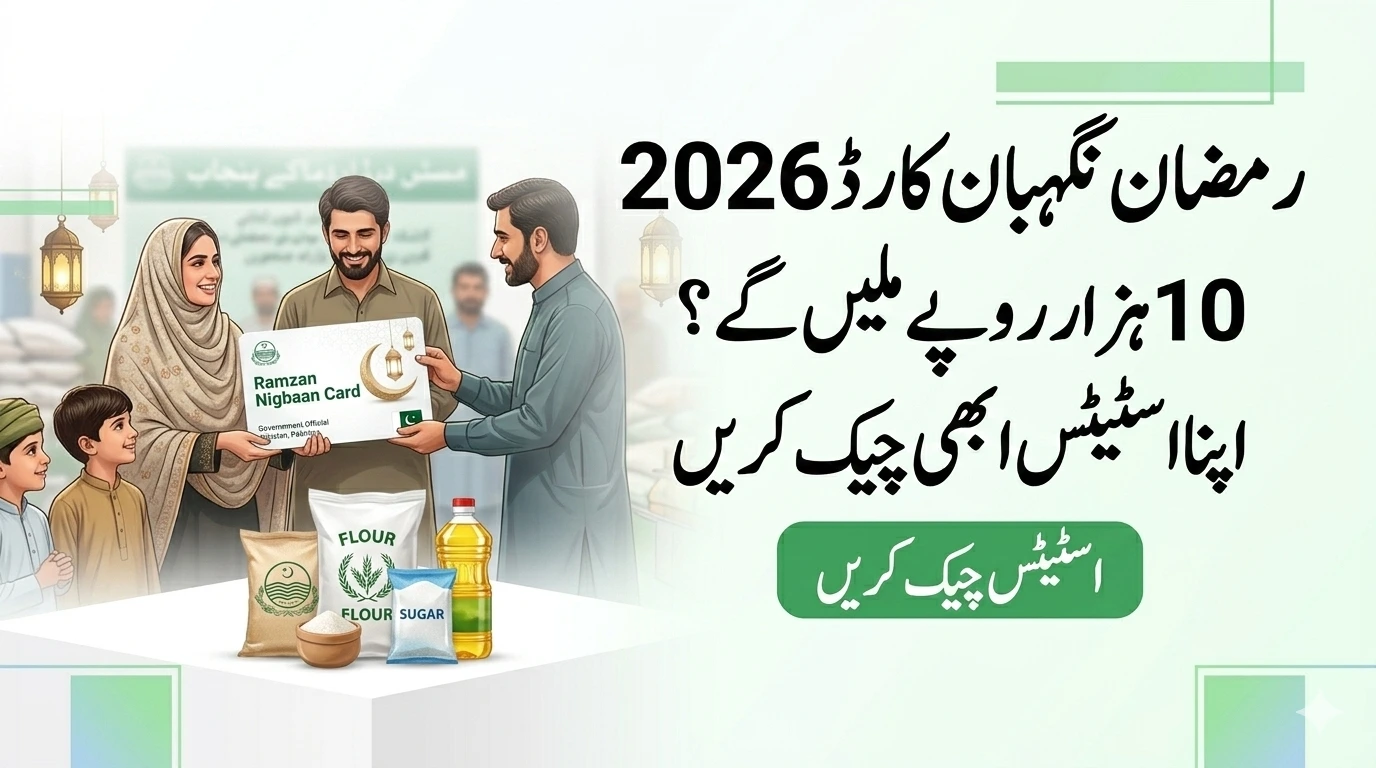
As Ramadan 2026 approaches, many families across Punjab are checking the Ramzan Nigbaan Card status and activation updates. The program, introduced by the Punjab Government, provides financial assistance and ration support to low-income households during the holy month.
Due to rising prices of essential items such as flour, sugar, and cooking oil, this relief initiative has become an important support system for thousands of families.
If you have already registered for the Ramzan Nigbaan Program 2026 but your card status still shows pending or under verification, this guide explains how the system works, why activation may be delayed, and how you can check your eligibility.
What Is the Ramzan Nigbaan Program 2026?
The Ramzan Nigbaan Program is a welfare initiative launched by the Government of Punjab to support financially vulnerable households during Ramadan.
Under this program, eligible families receive Rs 10,000 financial assistance along with subsidized food items.
To ensure transparency and fairness, the government uses digital verification systems instead of manual distribution.
These systems include:
-
CNIC verification through NADRA
-
Data from the Punjab Socio-Economic Registry (PSER)
-
Poverty score assessment
-
Household survey information
-
SMS confirmation through official numbers
-
District-wise phased distribution
This digital process helps prevent fraud and ensures that assistance reaches deserving families.
Ramzan Nigbaan Card 2026 Program Overview
| Feature | Details |
|---|---|
| Program Name | Ramzan Nigbaan Card 2026 |
| Cash Assistance | Rs 10,000 per family |
| Additional Support | Subsidized ration items |
| Registration Code | 8070 |
| Official Portal | pser.punjab.gov.pk |
| Coverage Area | Punjab Province |
| Distribution Method | ATMs, agents, and digital wallets |
| Helpline | 0800-02345 |
Latest Update on Ramzan Nigbaan Card Activation
According to recent updates from district welfare departments, the activation process is currently being carried out in multiple phases.
Current Activation Status
| Category | Status |
|---|---|
| Families already approved | Assistance distributed |
| Cards under verification | Pending activation |
| Newly surveyed households | Waiting for approval |
Because the program is digital and large-scale, some cases may take longer to verify.
District-Wise Distribution Progress
The first phase of card distribution has already started in several districts.
| District | Distribution Status |
|---|---|
| Lahore | Distribution started |
| Faisalabad | Distribution started |
| Muzaffargarh | Distribution started |
| Kot Addu | Distribution started |
| Multan | In progress |
| Rawalpindi | Expected in Phase 2 |
| Gujranwala | Expected in Phase 2 |
If your district has not yet started distribution, you may receive assistance in the upcoming phase.
Why Some Ramzan Nigbaan Cards Are Still Pending
Many applicants notice that their status shows pending, inactive, or under verification. This usually happens for several reasons.
1. Newly Added Families in the PSER Survey
Households recently added to the Punjab Socio-Economic Registry (PSER) require additional verification.
During this process, authorities check:
-
Household income information
-
Family size and structure
-
Asset ownership details
-
CNIC authentication
Because multiple databases are cross-checked, verification may take a few extra days.
2. High Number of Applications
Before Ramadan, the number of applications increases rapidly.
District offices often process thousands of cases daily, which can slow down the activation process.
3. Data Mismatch in Records
Small discrepancies in records can also delay approval.
Common issues include:
-
Expired CNIC
-
Incorrect mobile number
-
SIM not registered under the applicant’s CNIC
-
Incomplete survey information
Even minor errors may temporarily stop the system from activating the card.
4. District-Based Activation Phases
The program is implemented district by district to manage system load.
If your district is scheduled for a later phase, activation may take longer.
How to Check Ramzan Nigbaan Card Status by CNIC
Beneficiaries can check their status easily through SMS or online verification.
Method 1: Check Status Through SMS
Follow these steps:
-
Open the SMS application on your phone
-
Enter your 13-digit CNIC number
-
Send the message to 8070
-
Wait for the response
You may receive one of the following replies:
-
Eligible
-
Under Verification
-
Not Eligible
Method 2: Online Status Check
You can also check your eligibility through the official portal.
Steps:
-
Visit pser.punjab.gov.pk
-
Enter your CNIC number
-
Complete OTP verification
-
View your eligibility or activation status
This method provides instant updates about your application.
Estimated Time for Card Activation
The activation process usually takes a few days depending on verification.
| Process | Estimated Time |
|---|---|
| SMS confirmation | Instant to 24 hours |
| Eligibility verification | 3 – 10 days |
| Card activation | 5 – 15 days |
Newly surveyed households may experience slightly longer waiting times.
Importance of the PSER Survey
The Punjab Socio-Economic Registry plays a key role in determining eligibility for welfare programs.
Why PSER Data Is Important
-
Identifies financially vulnerable households
-
Prevents duplicate registrations
-
Filters out high-income applicants
-
Updates poverty scores regularly
If your financial situation has changed recently, updating your PSER survey can help improve eligibility.
What To Do If Your Card Is Still Pending
If your card activation is still pending, consider the following steps.
-
Keep your mobile phone active for official SMS updates
-
Ensure your CNIC is valid and not expired
-
Update your PSER survey information if necessary
-
Avoid agents or middlemen claiming faster activation
-
Be patient during high-traffic periods before Ramadan
Activation usually happens automatically once verification is complete.
Benefits of the Ramzan Nigbaan Program
The program provides important support to families facing financial difficulties.
Key Benefits
-
Rs 10,000 direct financial assistance
-
Subsidized grocery items for Ramadan
-
Transparent digital verification system
-
Reduced chances of corruption
-
Support for vulnerable households
Possible Challenges in the System
Although the digital system improves transparency, some challenges still exist.
Common issues include:
-
Slow processing during peak application periods
-
Temporary server overload
-
Verification delays for new applicants
-
Data mismatch in records
Despite these challenges, the digital system remains more reliable than older manual distribution methods.
Frequently Asked Questions
How long does Ramzan Nigbaan card activation take?
Usually between a few days and two weeks, depending on verification status.
Why did someone else receive approval earlier?
Activation depends on district processing phases and data verification completion.
Can visiting an office speed up the process?
No. The system works digitally, and physical visits do not change the queue order.
Can newly surveyed families still receive assistance?
Yes. Once verification is complete, they may be included in the next activation phase.
What should I do if my application is rejected?
You can update your PSER survey information and request a data review.
What Happens After Card Activation
Once your Ramzan Nigbaan Card is activated, the process becomes simple.
Steps include:
-
Receiving an official SMS confirmation
-
Visiting the authorized distribution center
-
Completing biometric verification
-
Receiving Rs 10,000 assistance or ration support
Always carry your original CNIC when collecting assistance.
Conclusion
The Ramzan Nigbaan Card Status & Activation 2026 system is designed to provide financial relief to deserving families across Punjab.
If your application is still pending, it is usually due to verification steps, district-wise distribution, or minor data mismatches.
To avoid delays, make sure your CNIC is valid, your mobile number is active, and your PSER survey information is accurate.
With proper verification, eligible families can receive assistance before or during Ramadan and benefit from this important welfare program.