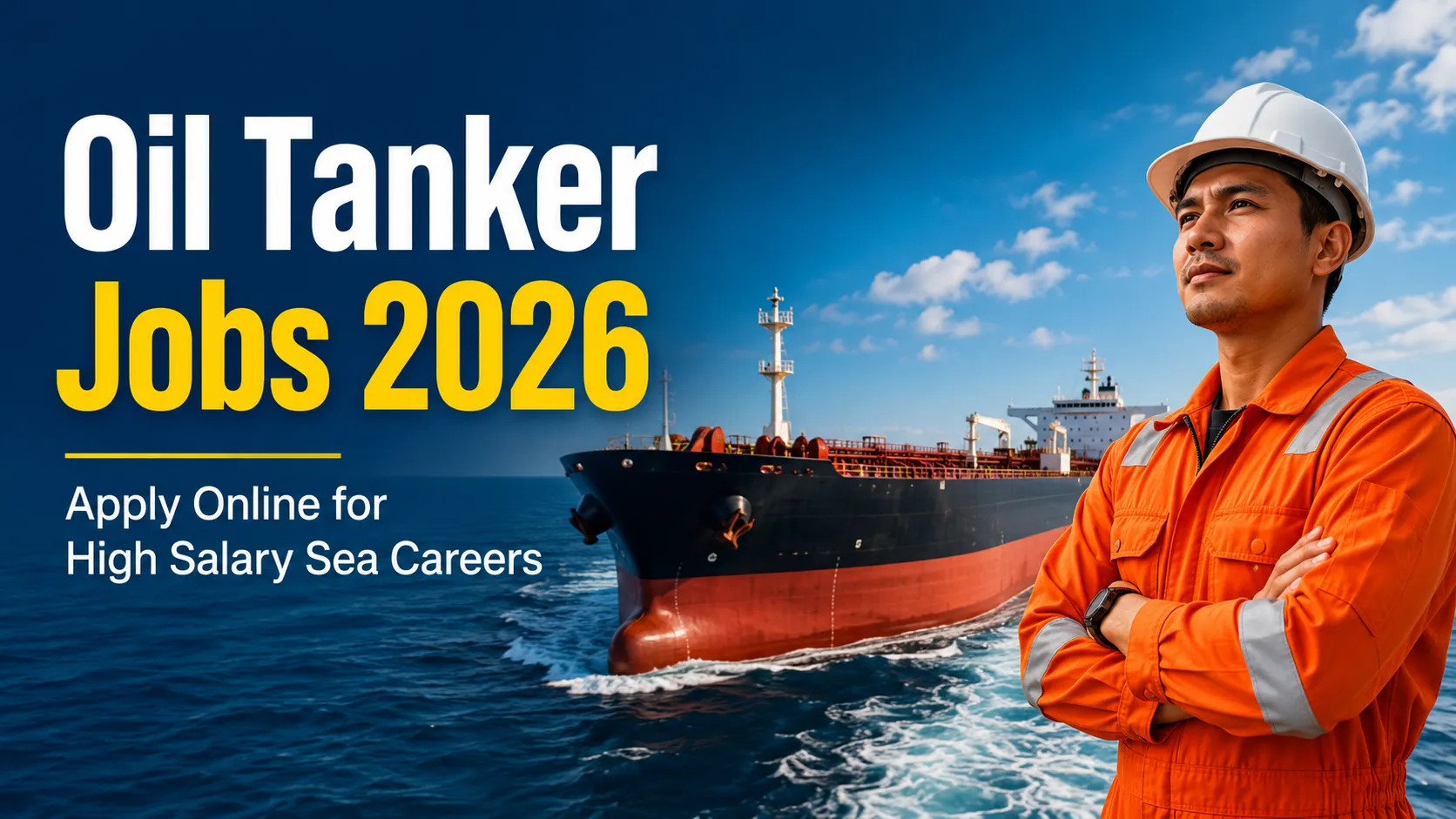
Oil tanker jobs remain an attractive career option for people who want to work at sea, earn competitive salaries and build international maritime experience.
These ships transport crude oil and refined petroleum products between ports, terminals and refineries. Because the cargo requires careful handling, tanker companies usually look for trained, medically fit and properly certified crew members.
Both experienced seafarers and new candidates may find opportunities in the deck, engine, electrical and catering departments. However, the qualifications required will depend on the position, vessel, employer and country issuing the applicant’s maritime documents.
This guide explains the common oil tanker jobs available in 2026, approximate salaries, required certificates and the safest way to apply online.
Important: This is a career guide, not an official recruitment notice. Vacancies, salaries, joining dates and eligibility conditions can change at any time. Always confirm the details through the shipowner or an officially licensed crewing agency before submitting documents.
Oil Tanker Jobs 2026: Quick Overview
| Job information | Details |
|---|---|
| Industry | Merchant shipping and maritime transport |
| Vessel types | Crude oil tankers and product tankers |
| Available departments | Deck, engine, electrical and catering |
| Experience level | Fresh trainees to senior officers |
| Salary currency | Usually stated in US dollars |
| Contract type | Fixed-term sea contract |
| Main qualification | Valid maritime documents and STCW training |
| Application method | Shipowner or licensed crewing agency website |
| Work location | International waters and ports |
| Recruitment fee | Legitimate agencies should not charge a job-placement fee |
What Is an Oil Tanker Job?
An oil tanker job is a position aboard a ship built to carry crude oil or refined petroleum products in bulk.
Oil tanker crews are responsible for operating the vessel, maintaining its machinery, navigating safely, managing cargo operations and following strict pollution-prevention procedures.
Tanker work is more specialized than many ordinary cargo-ship jobs. Crew members involved with cargo or cargo equipment may need approved oil and chemical tanker training in addition to normal maritime safety certificates. Senior officers and workers with direct responsibility for loading, discharging, cargo handling or tank cleaning may require advanced tanker training.
Oil Tanker Jobs and Expected Salaries in 2026
Oil tanker salaries depend on rank, experience, nationality, vessel size, trading area, company policy and contract conditions.
The figures below are approximate monthly market estimates. They are not guaranteed salary offers.
| Position | Approximate monthly salary |
|---|---|
| Master or Captain | $12,000–$16,500+ |
| Chief Engineer | $12,000–$16,000+ |
| Chief Officer | $9,000–$13,000 |
| Second Engineer | $9,000–$12,600 |
| Electrical Technical Officer | $6,000–$8,300 |
| Second Officer | $4,500–$5,600 |
| Third Engineer | $4,500–$5,500 |
| Third Officer | $3,500–$4,500 |
| Fitter or Welder | $2,500–$3,300 |
| Able Seaman | $2,000–$2,400 |
| Ordinary Seaman | $1,000–$1,800 |
| Oiler or Motorman | $1,500–$2,500 |
| Cook or Steward | $1,200–$2,500 |
Current maritime job-market data shows that senior officers on crude oil tankers can earn considerably more than junior ratings. For example, 2026 market averages reported for crude oil tankers include around $16,456 for masters, $16,116 for chief engineers, $12,952 for chief officers and $2,289 for able seamen. Actual offers may be higher or lower.
The International Labour Organization’s recommended minimum monthly basic wage for an able seafarer increased to $690 from January 1, 2026. This is a minimum basic wage benchmark rather than a typical total oil-tanker salary. Overtime, leave pay, bonuses and contract terms can affect total earnings.
Popular Oil Tanker Positions
Master or Captain
The master is the highest-ranking officer aboard the vessel. The captain is responsible for the ship, crew, cargo, navigation, safety and compliance with international regulations.
Applicants normally need:
- A valid master’s Certificate of Competency
- Considerable tanker experience
- Advanced oil tanker training
- Strong leadership and communication skills
- A valid medical fitness certificate
Chief Officer
The chief officer manages the deck department and usually has major responsibility for cargo planning, loading, discharging, stability and deck safety.
Previous experience on the same tanker type is commonly required.
Deck Officers
Second and third officers assist with navigation, watchkeeping, safety equipment, voyage planning and onboard records.
A valid officer’s Certificate of Competency, STCW training and tanker endorsements may be required.
Chief Engineer
The chief engineer manages the vessel’s engines, machinery, fuel systems, maintenance and technical staff.
Because breakdowns at sea can create serious safety and financial risks, this is one of the highest-paid positions aboard an oil tanker.
Second and Third Engineers
Engineering officers operate and maintain the propulsion system, generators, pumps, boilers and other mechanical equipment.
Applicants normally need a valid engineering Certificate of Competency and suitable sea experience.
Electrical Technical Officer
The Electrical Technical Officer, commonly called an ETO, maintains electrical, electronic, automation, alarm and control systems.
Modern tankers depend heavily on automated cargo and machinery systems, making qualified ETOs valuable crew members.
Able Seaman
An Able Seaman performs deck maintenance, lookout duties, mooring operations, cargo-related support and safety work.
Relevant sea service, rating certification and tanker training may be required.
Ordinary Seaman
An Ordinary Seaman is usually a junior deck crew member. Duties may include cleaning, painting, assisting with mooring and supporting senior deck ratings.
This can be an entry route for candidates who have completed basic maritime training but have limited sea experience.
Oiler, Motorman or Wiper
These ratings work in the engine department. They help engineers maintain machinery, clean engine-room areas and monitor equipment.
A wiper is normally an entry-level worker, while oilers and motormen usually need more experience.
Cook and Steward
Catering crew members prepare meals, maintain food-storage areas and keep accommodation spaces clean.
Although they may not handle cargo, they still need the safety and medical documents required for service at sea.
Eligibility Requirements
The exact requirements will be listed in each vacancy. However, most applicants need some or all of the following:
| Requirement | Why it is needed |
|---|---|
| Valid passport | International travel and immigration |
| Seafarer’s book or CDC | Official record of maritime service |
| Medical fitness certificate | Confirms fitness to work at sea |
| STCW Basic Safety Training | Basic survival and emergency skills |
| Certificate of Competency | Required for licensed officers |
| Certificate of Proficiency | Required for certain ratings and duties |
| Tanker training certificate | Required for specified tanker operations |
| Sea-service record | Proves relevant onboard experience |
| Maritime CV | Shows rank, vessels, contracts and qualifications |
| Recent photograph | Used in the crewing record |
| Vaccination documents | Required by some routes or employers |
Applicants should also be able to follow safety instructions in English. Officers may need stronger written and spoken English because they prepare reports, communicate with ports and use international maritime procedures.
Required Oil Tanker Training
People assigned duties involving oil cargo or cargo equipment may need approved basic training for oil and chemical tanker cargo operations.
Advanced training is normally required for masters, chief engineers, chief officers, second engineers and other personnel who have immediate responsibility for:
- Loading cargo
- Discharging cargo
- Handling cargo in transit
- Tank cleaning
- Cargo-care procedures
- Cargo-related emergency response
Advanced certification may also require approved tanker sea service or supervised onboard training.
Candidates should complete courses only through maritime training institutes recognized by their national maritime authority.
Can Fresh Candidates Apply?
Fresh candidates can apply for trainee, cadet and junior rating positions, but they should not expect to join directly as senior officers or experienced tanker crew.
Possible entry-level positions include:
- Deck cadet
- Engine cadet
- Trainee ETO
- Ordinary Seaman
- Wiper
- Junior steward
- Galley trainee
Completing basic safety training does not automatically guarantee a job. Employers may prefer candidates with previous sea time, tanker familiarization or experience on a similar vessel.
New candidates should focus on building verified sea service instead of paying agents who promise a senior position without experience.
How to Apply Online for Oil Tanker Jobs
1. Select the Right Position
Apply only for jobs that match your rank, certificates and experience.
For example, an Ordinary Seaman should not apply for an Able Seaman position unless the required certification and sea service have been completed.
2. Prepare a Maritime CV
Your CV should be simple and easy to check. Include:
- Full name and contact details
- Nationality and date of birth
- Position applied for
- Passport details
- Seafarer’s book or CDC details
- Certificate of Competency
- STCW certificates
- Tanker endorsements
- Medical certificate
- Previous vessels
- Vessel type and deadweight
- Previous employers
- Rank served
- Sign-on and sign-off dates
- References, when available
Do not add false vessel experience. Maritime documents and sea-service records can be verified.
3. Scan Your Documents Clearly
Prepare readable PDF copies of your documents. Check that:
- All pages are visible
- Certificate numbers are readable
- Expiry dates are clear
- Names and dates match
- Files are not password-protected
- The total file size meets the employer’s limit
Avoid sending passport copies or personal documents through unknown social-media accounts.
4. Find a Verified Employer
The safest options are:
- Official shipowner career pages
- Official ship-management company websites
- Licensed crewing or manning agencies
- Recognized maritime employment platforms
- Government-approved seafarer portals
- Referrals from verified maritime professionals
Check the company’s address, official email domain, telephone number and recruitment licence before applying.
5. Complete the Online Application
Fill in every required field carefully. Use the same spelling shown on your passport and maritime certificates.
Upload only the documents requested by the employer. Never provide banking passwords, verification codes or unnecessary financial information.
6. Attend the Interview or Assessment
Shortlisted candidates may be asked questions about:
- Previous vessel experience
- Cargo operations
- Fire and emergency procedures
- Pollution prevention
- Enclosed-space entry
- Permit-to-work systems
- Mooring safety
- Watchkeeping
- Shipboard machinery
- English communication
Senior officers may face technical assessments and detailed questions about tanker operations.
7. Read the Employment Contract
Before accepting the job, check:
- Name of the shipowner
- Vessel name and flag
- Position and salary
- Overtime arrangements
- Contract duration
- Joining port
- Working and rest hours
- Insurance coverage
- Repatriation terms
- Leave pay
- Early termination conditions
Do not travel without a written seafarer employment agreement.
Application Guidance for Pakistani Seafarers
Applicants from Pakistan can use the Government Shipping Office’s online portal for services provided to seafarers and manning agencies. The portal allows seafarers to register and access related online facilities.
Pakistani applicants should verify that their:
- CDC or Seaman Service Book is valid
- Medical certificate is current
- STCW certificates are recognized
- Tanker endorsements have not expired
- Sea-service entries are complete
- Manning agency is officially approved
- Employment agreement is issued before travel
Policies and document procedures may change, so candidates should confirm current requirements directly with Pakistan’s Government Shipping Office.
How to Avoid Fake Oil Tanker Job Offers
High salaries and international travel make maritime job seekers a common target for scammers.
A fake recruiter may offer immediate joining without checking certificates, experience or medical fitness. The scammer may later request money for registration, processing, visa approval, security clearance or a guaranteed appointment letter.
Under the Maritime Labour Convention, legitimate recruitment and placement services should not charge a seafarer for finding employment. Limited personal-document costs may remain the candidate’s responsibility, but visa costs should be paid by the shipowner.
Common Warning Signs
- Guaranteed selection without an interview
- Very high salary for an inexperienced candidate
- Communication only through WhatsApp or Telegram
- Use of free email accounts instead of a company domain
- Urgent demand for payment
- Requests for cryptocurrency or gift cards
- Poorly written appointment letters
- A company name that does not match its email address
- Refusal to provide vessel or employer details
- Requests for banking passwords or one-time codes
The International Transport Workers’ Federation warns that fake recruiters often disguise payments as agency, registration, medical, visa or processing fees.
Advantages of Working on an Oil Tanker
Oil tanker careers may offer:
- Competitive salaries
- International work experience
- Clear promotion routes
- Food and accommodation aboard the ship
- Long leave periods between contracts
- Experience with advanced maritime systems
- Opportunities to work for global shipping companies
The biggest financial benefits normally come after a seafarer gains experience, completes higher certification and moves into an officer or technical position.
Challenges You Should Consider
Life aboard a tanker is not suitable for everyone.
Crew members may face:
- Long periods away from family
- Strict safety procedures
- Physically demanding work
- Night watches and changing schedules
- Limited personal space
- Harsh weather
- High responsibility during cargo operations
- Restricted internet access on some vessels
- Medical and psychological pressure
- Work in remote international waters
Candidates should consider both the salary and working conditions before choosing a sea career.
Tips to Improve Your Selection Chances
Keep every certificate valid and maintain a clear record of sea service.
Apply for positions that genuinely match your experience. Tailor your CV to the vessel type instead of sending the same application everywhere.
Mention experience with cargo pumps, inert-gas systems, enclosed-space procedures, tank cleaning, mooring operations, planned maintenance or automation systems when it is relevant to your role.
Continue improving your spoken maritime English and technical knowledge. During an interview, give clear answers based on real experience rather than memorized definitions.
Most importantly, build your career step by step. Genuine experience and recognized qualifications are more valuable than certificates obtained from unapproved institutes.
Frequently Asked Questions
Are oil tanker jobs available in 2026?
Oil tanker companies and crewing agencies continue to recruit officers, engineers, ratings, electrical staff and catering crew. Actual vacancies change regularly according to crew rotations and vessel requirements.
What is the highest-paying oil tanker job?
Masters and chief engineers are normally among the highest-paid crew members. Their salaries reflect their experience, qualifications and responsibility for the vessel.
Can I apply without tanker experience?
You may apply for trainee, cadet or junior positions when the employer accepts fresh candidates. Senior and cargo-responsibility positions usually require previous tanker experience.
Is STCW training compulsory?
STCW safety training is required for international seafarers. Additional tanker training is required for personnel assigned specified cargo-related duties.
Can women apply for oil tanker jobs?
Qualified women can apply for deck, engineering, electrical, catering and officer positions. Selection depends on certification, medical fitness, experience and the employer’s requirements.
Do oil tanker companies provide free accommodation?
Food and accommodation are normally provided aboard the vessel during the employment contract. Candidates should confirm all benefits in the written agreement.
Is the salary paid throughout the year?
Some contracts pay only for onboard months, while others include leave pay or different wage arrangements. Read the contract carefully before accepting an offer.
Should I pay an agent for a guaranteed job?
No legitimate recruiter should sell or guarantee a maritime position. Verify the agency and avoid paying job-placement or appointment-letter fees.
Final Advice
Oil tanker jobs can provide strong salaries and a clear long-term career path, but these positions require discipline, technical knowledge and proper certification.
Start by choosing a position that matches your qualifications. Prepare a professional maritime CV, keep your certificates valid and apply through verified shipowners or licensed crewing agencies.
Never submit false experience or pay an unknown recruiter for guaranteed selection. A genuine employer will check your documents, assess your skills and provide a written employment contract before you join the vessel.