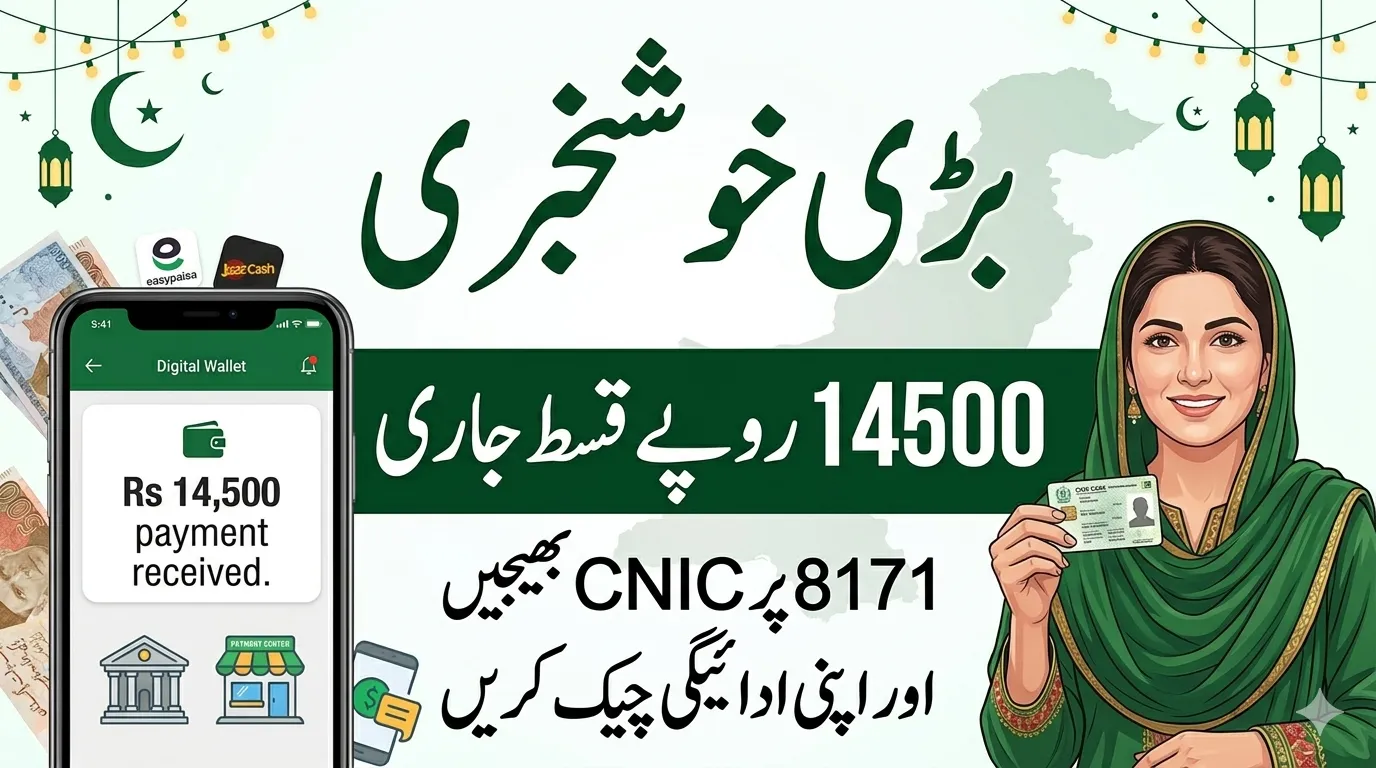
The Government of Pakistan has officially announced the release of the Benazir Kafalat payment for January to March 2026 under the Benazir Income Support Program (BISP). According to the latest update, eligible beneficiaries will receive Rs 14,500 as part of the quarterly financial assistance.
This payment aims to support low-income families across Pakistan, especially women registered under the Benazir Kafalat Program. Millions of beneficiaries are expected to receive this installment through banks, payment camps, and authorized retailers.
People who are registered in the program can verify their payment status through the 8171 web portal or by using the BISP check balance online by CNIC system before visiting payment centers.
What Is the Benazir Kafalat Program?
The Benazir Kafalat Program is one of the most important initiatives under the Benazir Income Support Program (BISP). The program provides quarterly financial assistance to women from low-income households to help them manage basic living expenses.
The main objective of this program is to reduce poverty and improve financial stability for vulnerable families across Pakistan.
Through this initiative, millions of women receive financial support that helps them cover important expenses such as:
• Food and groceries
• Healthcare costs
• School expenses for children
• Daily household needs
The Rs 14,500 installment for January–March 2026 continues the government’s effort to support families during rising inflation and economic challenges.
Rs 14,500 Benazir Kafalat Payment for January–March 2026
The latest update confirms that the Rs 14,500 BISP payment has been released for eligible beneficiaries.
Registered families can now collect their payments from authorized payment centers, partner banks, or designated camps in their districts.
The increase in the payment amount is intended to help families deal with the rising cost of living and essential household expenses.
Beneficiaries are advised to check their payment status online before visiting payment centers to avoid unnecessary travel or waiting.
How to Check BISP Rs 14,500 Payment Online by CNIC
Beneficiaries can easily verify whether their payment has been released by using the BISP online CNIC verification system.
Steps to Check BISP Payment Online
-
Visit the official 8171 BISP web portal.
-
Enter your CNIC number in the required field.
-
Complete the captcha verification.
-
Click the submit button.
-
Your payment status will appear on the screen.
This method allows beneficiaries to confirm their installment quickly without visiting BISP offices.
8171 SMS Method to Check BISP Payment
For people who do not have internet access, the government has also provided a simple SMS verification method.
Steps to Check Payment Through SMS
-
Open the SMS application on your mobile phone.
-
Type your CNIC number without spaces.
-
Send the message to 8171.
-
Wait for the response message.
The reply will inform you whether your payment is available and where it can be collected.
BISP Payment Distribution Methods
To make the payment process easier and more transparent, the government distributes BISP payments through multiple channels.
Main Payment Channels
• Habib Bank Limited (HBL)
• Bank of Punjab (BOP)
• Bank Alfalah
• Designated BISP payment camps
• Authorized payment agents
Beneficiaries should confirm their payment through the 8171 portal before visiting payment locations.
Eligibility Criteria for Benazir Kafalat Payment
The Benazir Kafalat Program uses a verification system to ensure assistance reaches deserving families.
Basic Eligibility Requirements
• Household income below the poverty threshold
• Registration in the NSER (National Socio-Economic Registry) survey
• Female head of household registered in the program
• Valid and verified CNIC
Families who meet these conditions may qualify for regular financial assistance under BISP.
Education Stipend Under the Benazir Program
In addition to the main financial support, the government also provides an education stipend for children of registered beneficiaries.
The purpose of this program is to encourage families to send their children to school and continue their education.
Students enrolled in the following levels may receive financial support:
• Primary school
• Secondary school
• Higher secondary school
This initiative helps improve school attendance and educational development among low-income families.
Common Issues Beneficiaries May Face
While collecting their payments, some beneficiaries may experience certain issues. Most of these problems are related to verification or registration records.
Common Problems
• Biometric verification failure
• Incorrect CNIC information
• Incomplete NSER survey data
• Payment not yet released in the district
If beneficiaries face any of these issues, they should visit the nearest BISP office to update their records.
Updating personal information ensures future payments are received without delays.
Improvements in the BISP Payment System
The Government of Pakistan continues to improve the BISP system to make payments more transparent and accessible.
Recent Improvements
• Online verification through the 8171 portal
• Biometric verification systems at payment centers
• Partnerships with major banks for secure payments
• Expansion of digital payment systems
These improvements help ensure that financial assistance reaches deserving families safely and efficiently.
Final Thoughts
The release of the Rs 14,500 Benazir Kafalat payment for January–March 2026 is an important step in supporting millions of low-income families across Pakistan.
Through the Benazir Income Support Program, the government continues to provide essential financial assistance to vulnerable households, helping them manage daily expenses during difficult economic conditions.
Beneficiaries should check their payment status through the 8171 portal or SMS service before visiting payment centers to ensure a smooth collection process.
The Benazir Kafalat Program remains one of the most significant social protection initiatives in Pakistan, playing a key role in reducing poverty and supporting families in need.