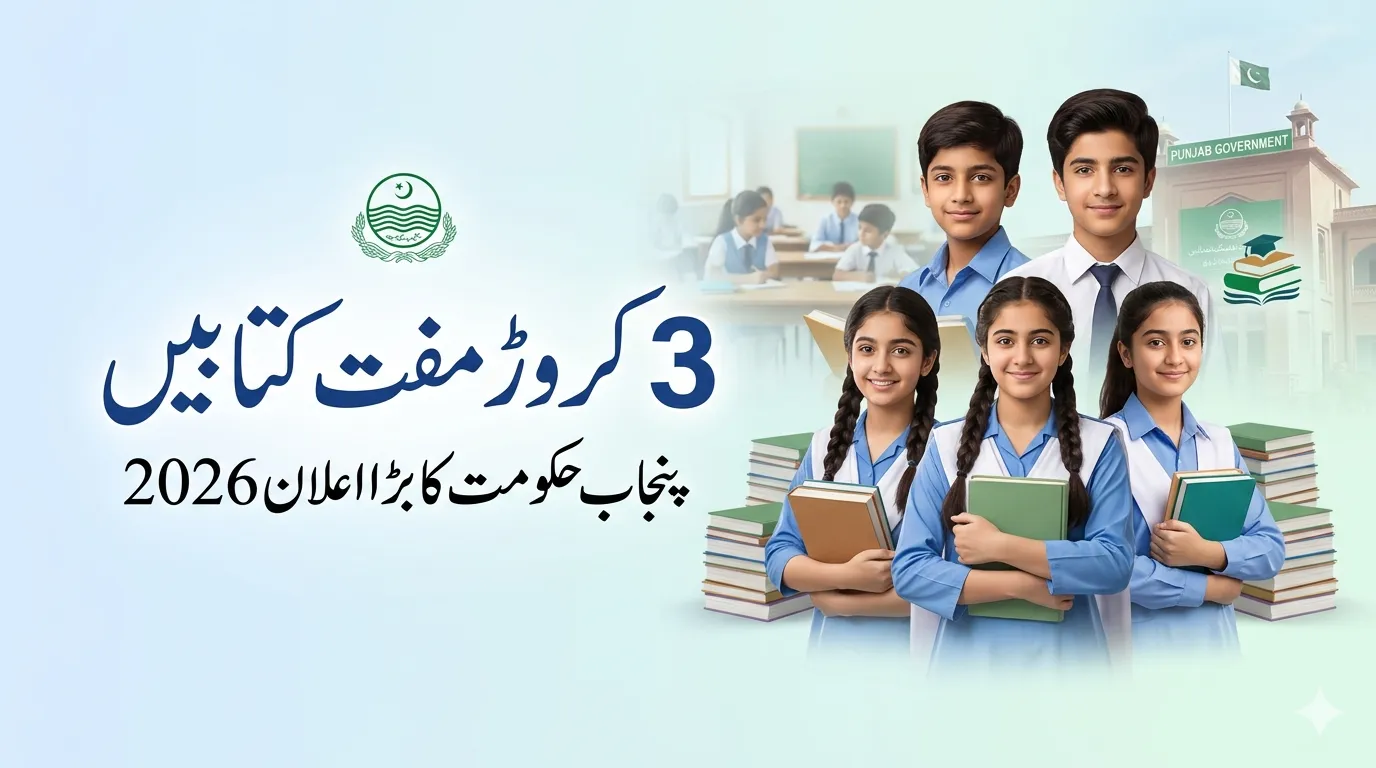
Punjab Free Books Scheme The Punjab Free Textbooks 2026 initiative is one of the most ambitious education reforms introduced by the provincial government in recent years. Imagine starting a new academic year without worrying about buying expensive books—that’s exactly the reality this program is creating for millions of students across Punjab. With more than 30 million textbooks being distributed free of cost, the government is actively working to eliminate financial barriers that often prevent children from accessing quality education.
This initiative is not just about handing out books—it’s about leveling the playing field. Whether a student lives in a rural village or a major city, the goal is the same: ensure everyone starts school fully prepared. The program is part of the broader vision called “Parho Punjab, Barho Punjab”, which focuses on literacy, accessibility, and educational equality. By providing updated and revised textbooks at the beginning of the academic session, authorities are ensuring that students don’t fall behind before they even begin.
Read Also: Free Heart Surgery for Children – Complete Guide 2026
What is “Parho Punjab, Barho Punjab”?
At its core, “Parho Punjab, Barho Punjab” is more than a slogan—it’s a roadmap for transforming the education system. The phrase literally translates to “Educate Punjab, Progress Punjab,” and it reflects a strong belief: education is the backbone of development. Through initiatives like free textbooks, improved school infrastructure, and updated curricula, the government aims to build a more literate and skilled population.
This vision recognizes a harsh reality—many families struggle to afford even basic educational supplies. Without textbooks, students rely on shared or outdated materials, which creates learning gaps. By addressing this issue head-on, the program ensures that no child is left behind simply because of financial limitations.
Why Free Textbooks Matter in 2026
In today’s world, education is no longer optional—it’s essential. Yet, the cost of textbooks remains a significant burden for many households. For families with multiple children, buying books every year can become overwhelming. That’s where this initiative makes a real difference. By making textbooks completely free, the government is effectively removing one of the biggest barriers to education.
Statistics show that over 38,000 government schools are being covered under this scheme, reaching millions of students across the province. This massive scale highlights the seriousness of the initiative. When students receive their books on time, they can engage fully in lessons, complete assignments, and build a strong academic foundation right from day one.
Key Highlights of Punjab Free Textbooks Scheme
Total Books and Coverage
Let’s break down the numbers because they truly tell the story. The Punjab government has planned to distribute over 30 million textbooks during the 2026 academic session. That’s not just a big number—it’s a massive logistical achievement. These books are printed, stored, and transported across districts, ensuring timely delivery to every corner of the province.
Read Also: Good News for Farmers: CM Punjab Livestock Card Scheme 2026 Complete Guide
Here’s a quick overview:
| Detail | Information |
|---|---|
| Total Books | 30+ Million |
| Schools Covered | 38,000+ |
| Classes | Nursery to Grade 10 |
| Start Date | April 2026 |
| Cost | 100% Free |
This scale ensures that the program reaches students at every stage of their early education journey, from Katchi (Nursery) all the way to Matric (Grade 10).
Classes and Schools Included
One of the most impressive aspects of this program is its inclusivity. Unlike many initiatives that target specific groups, this scheme covers all students enrolled in government schools. That means no complicated application process, no income verification hurdles—just simple, universal access.
Students from both urban and rural areas are equally eligible, which is crucial for bridging the educational gap. Rural areas, in particular, often face shortages of educational resources, and this initiative ensures they receive the same quality materials as urban schools.
Distribution Phases Explained
Phase 1 Distribution Breakdown
The distribution process is carefully structured to ensure efficiency. In Phase 1, priority is given to early-grade students and critical classes:
-
Nursery to Grade 3: 100% distribution
-
Grades 4–5: 80% distribution
-
Grades 6–9: 50% distribution
-
Grade 10: 100% distribution
This phased approach ensures that younger students and board classes are fully equipped first, as they are considered more vulnerable to learning disruptions.
Read Also: Apply Now: PM Youth Laptop Scheme 2026 for University Students
Phase 2 Completion Strategy
Phase 2 focuses on filling the gaps left in Phase 1. Schools submit their remaining requirements based on actual enrollment data, and additional books are supplied accordingly. This ensures that no student is left without a complete set.
Interestingly, the government also uses a Book Bank System, where previously used books are temporarily distributed until new ones arrive. This smart strategy ensures that students can start learning immediately, even if new books are delayed.
How the Distribution Process Works
From Printing to Classroom Delivery
The journey of a textbook—from printing press to a student’s desk—is surprisingly complex. First, books are printed in bulk under the supervision of educational authorities. Then, they are transported to central warehouses before being distributed to district and tehsil storage centers.
From there, logistics teams ensure delivery to individual schools. Finally, teachers hand over the books directly to students in classrooms, ensuring a smooth and organized process.
Role of Warehouses and Logistics
Warehouses play a critical role in this operation. According to officials, books have already been delivered to warehouses across various districts to ensure timely distribution.
Kashif Shahzad, a warehouse in-charge, stated:
“We have ensured timely supply of books in all warehouses and we are trying to ensure that every student has a complete set at the beginning of the new academic year.”
This highlights the level of planning and coordination involved in the program.
Eligibility Criteria for Students
Who Can Get Free Books?
The eligibility criteria are simple and inclusive:
-
Must be enrolled in a Punjab government school
-
Student record must be active in the SIS portal
-
Applicable for Katchi to Grade 10
-
Basic verification (School ID or B-Form)
-
Regular attendance preferred
This straightforward approach ensures maximum participation without unnecessary bureaucracy.
Monitoring and Transparency Measures
Digital Tracking and Inspections
To prevent misuse, the government has implemented strict monitoring systems. Inventory is tracked digitally, and distribution data is matched with student enrollment records. Surprise inspections are conducted to ensure transparency.
Any attempt to sell free textbooks or charge illegal fees is strictly prohibited, and strict action is taken against violators.
Objectives of the Free Textbooks Initiative
Reducing Financial Burden
One of the primary goals is to reduce the financial pressure on families. Education should not be a luxury, and this initiative ensures that even low-income households can afford to send their children to school.
Improving Academic Performance
When students have access to proper learning materials from day one, their academic performance improves significantly. Teachers can follow the syllabus without interruptions, and students can participate actively in lessons.
Benefits for Students and Parents
Educational Equality Across Punjab
The benefits of this program go beyond just free books. It promotes educational equality, ensuring that every child has the same opportunities to learn and succeed.
Students become more motivated, attendance improves, and parents feel more confident about sending their children to school. It’s a win-win situation for everyone involved.
Read Also: Rs. 14,500 BISP Payment Released – Check Status via 8171 Portal
Challenges and Real-World Issues
Delays and Distribution Gaps
Despite its success, the program is not without challenges. In some areas, delays in book delivery have been reported, causing temporary disruptions in learning. Such issues highlight the importance of efficient logistics and continuous monitoring.
Comparison with Previous Years
Improvements in 2026
Compared to previous years, the 2026 initiative shows significant improvements in planning, monitoring, and scale. Early distribution timelines and updated textbooks ensure better learning outcomes.
Future of Education Reforms in Punjab
Digital Learning and Expansion Plans
Looking ahead, the government may expand this initiative to include digital textbooks, scholarships, and additional support programs. This could further strengthen the education system and prepare students for a digital future.
Conclusion
The Punjab Free Textbooks 2026 initiative is more than just a government program—it’s a powerful step toward educational equality and social progress. By distributing over 30 million textbooks, the government is ensuring that every student starts the academic year with confidence and the right tools for success.
This initiative removes financial barriers, improves learning outcomes, and builds a stronger foundation for the future. While challenges remain, the overall impact is undeniably positive, setting a benchmark for other regions to follow.
Read Also: Rehmat Card Registration 2026 – Full Guide for Widows
FAQs
1. Are government textbooks free in 2026?
Yes, all textbooks provided under this program are completely free for government school students.
2. What should I do if some books are missing?
Contact your school teacher or headmaster to arrange the missing books.
3. Can private school students apply?
No, this scheme mainly covers government schools, though some partner schools may participate.
4. How can I verify official textbooks?
Official books have a “Not for Sale (Muft)” stamp and may include a QR code.
5. When will all students receive their books?
Distribution is ongoing in phases and is expected to complete early in the academic session.